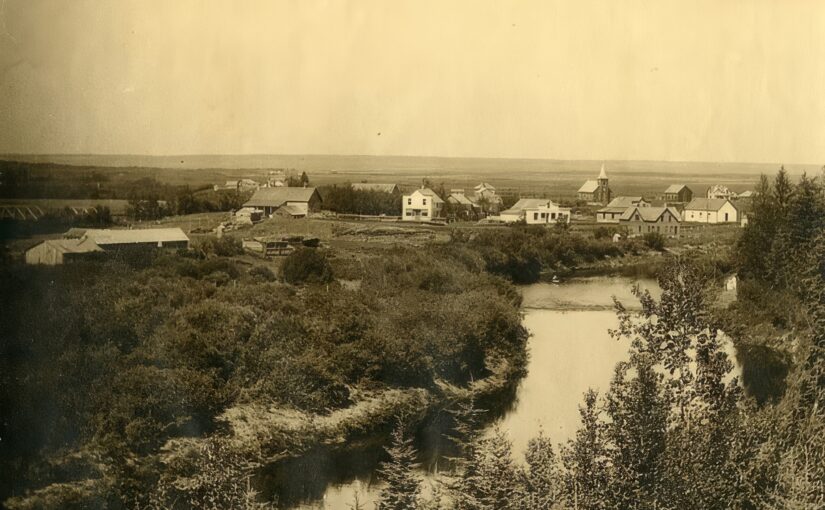
Markerville, Alberta, Canada. 1932. Image sourced from Wikipedia.
Icelandic Roots by Shaune Jonasson
“As we explore the Icelandic settlements in Alberta, one particular area comes to mind. Markerville began as a small community and has remained relatively small over these many years. However, despite its size, it is no less important than any other Icelandic settlement in North America. Its footprint is as impressive today as it ever has been.”
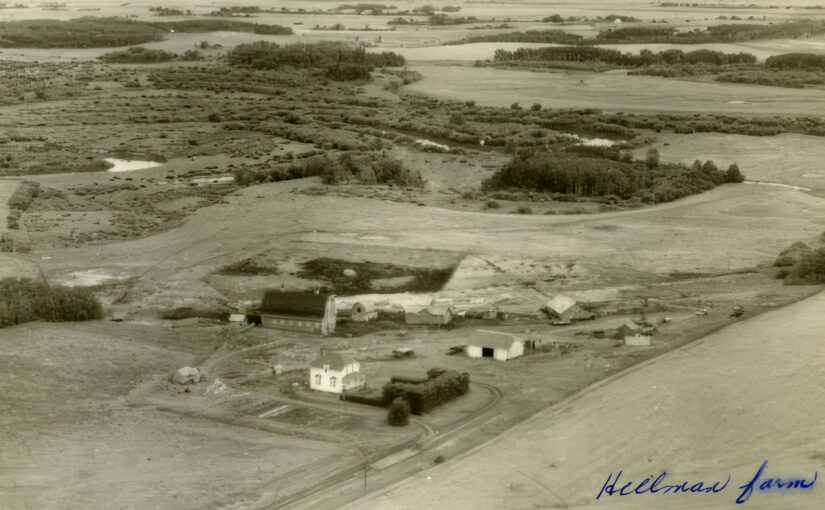
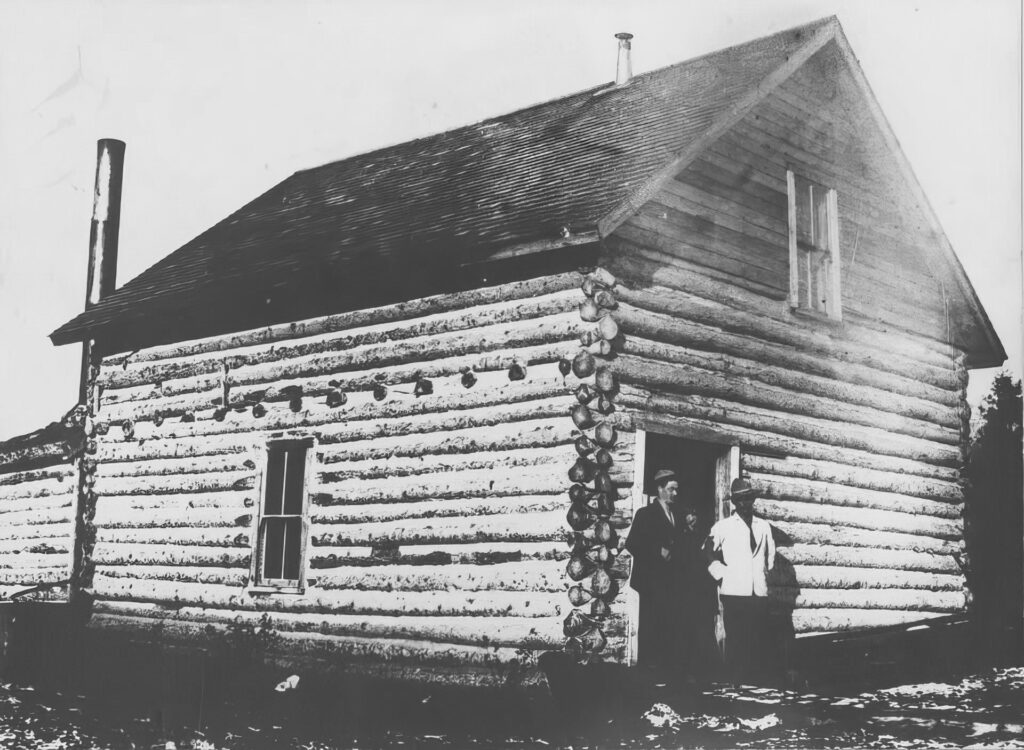
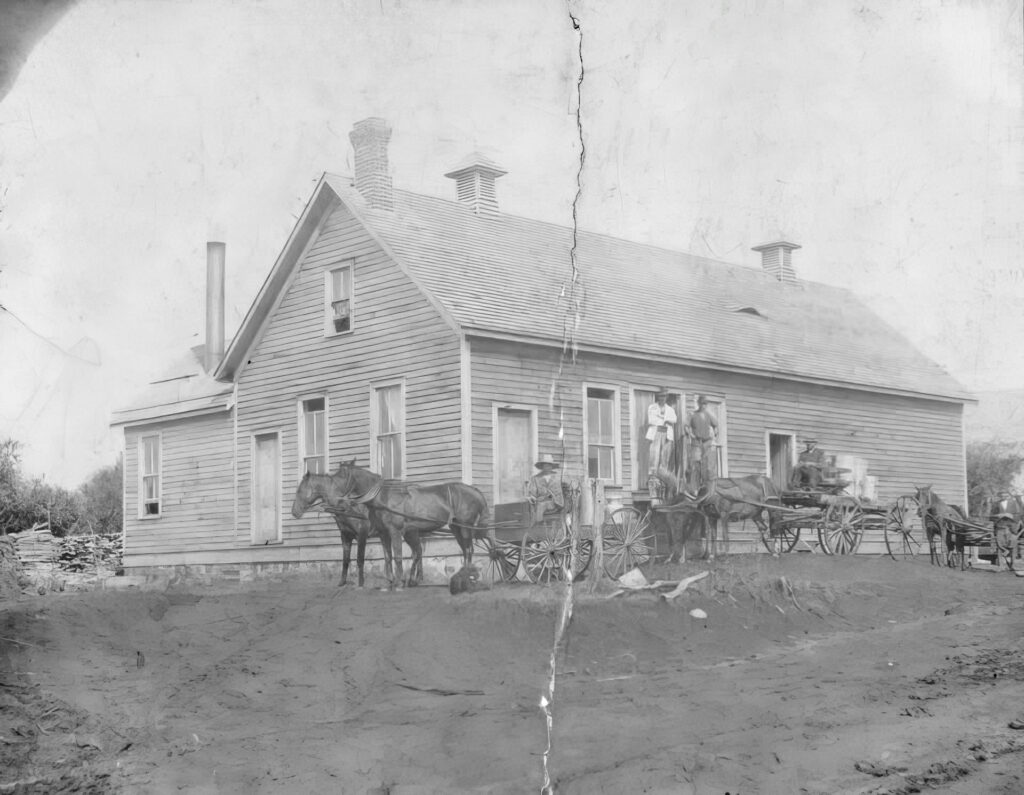
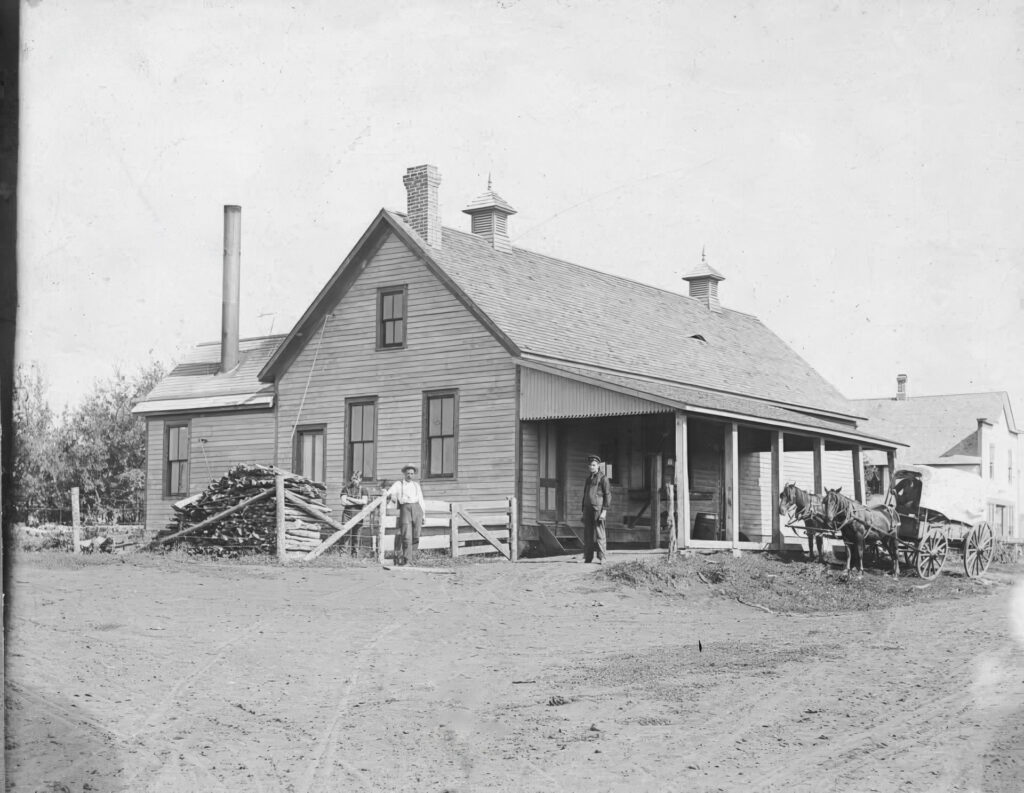
Above: Herman Hillman farm house built by sons John and Joe.
In mid-June 2026, Don Anderson contacted us to see if we wanted digital copies of several old photos of the Hillman families, to archive at the Markerville Creamery Museum. Don’s great-grandfather was Herman Hillman, and grandmother was Lena (Hillman) Anderson.
Along with photos which include the names of the people in them, he donated a copy of “Grub-Axe To Grain”, a history of this area with pictures, that he described as “A must have.”
The timing was perfect: A Hillman Family Reunion is taking place in Markerville on the July 11th, 2026 weekend, and I’m sure they will love seeing these photos and perhaps adding some of them to their own collections! And our copy of “Grub-Axe To Grain” had been recently moved from public access to preserve it. Now that we have a like-new copy for the archives, we can bring the older one back for viewing.
The Creamery Museum is very appreciative of Don’s generosity, and thankful he reached out to share some historic photos from the Lena (Hillman) Anderson family.
Hillman family: Pete, John, and Harry. Group Photo: Lena (Hillman) Anderson and two sons Edwin and Lloyd, with Edward (husband) Edwin’s wife Marian and grandchildren: Carol, Donald, Gerry, Allan and Marlene (in Lena’s lap).
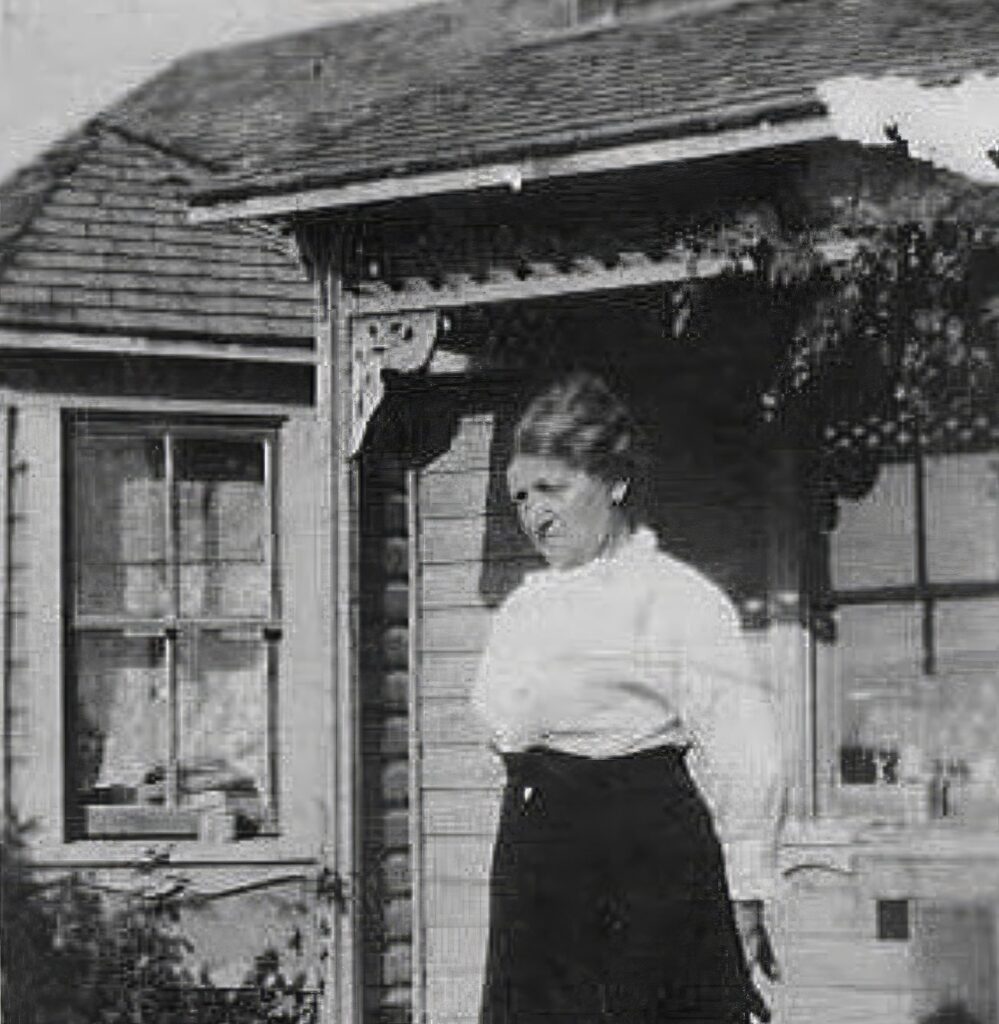
Andersons: Lena (Hillman) and Edward Anderson.
By the Car: Lena, Edward, Edwin, Marian, Carol and Jerry around 1947. Lena with sons: Edwin and Lloyd (Andy) Group Photo:Top Row R-L | Edwin Anderson, Joe Davidson, Warren Davidson, Lloyd Anderson, Harold Davidson. Middle Row | Marian Anderson, Eli Davidson, Edward Anderson, Winney and Lenora Davidson. Back Row | Carol, Allan, Donald and Marlene Anderson, Bev Davidson, Gerry Anderson.
Guꝺmundur Stefánsson, Stephan and Helga’s second son, passed away on this day in 1947. We know he was a pretty active and entrepreneurial sort, and one of the lasting impacts he had on the Stephansson home was his work expanding the house. By the time of his late teens/ early adulthood, Guꝺmundur had become “a handy carpenter” and he assisted his father with additions to the house – raising the roof above the front bedroom, kitchen and pantry as well as adding a bay window.
If you have any photos or other records of Guꝺmundur, please consider donating them.
Portrait of Gudmundur Stephansson c. 1902, PAA PH75.28.23. “Stephansson house at Markerville, Alberta, and Stephansson family”, 1907 courtesy Glenbow Archives NA-270-3.
Posted on Stephansson House Provincial Historic Site Facebook Page
On either February 26th or 27th of 1919, the Alberta Dairymen’s Association was formed.
The Markerville Creamery, which had been operating since 1902, was a significant player in the dairy industry, and Dan Morkeberg was responsible for its success.
“Recognizing that an association, composed of all interests working together, could accomplish much towards the advancement of an industry well adapted to Alberta, steps were taken at a meeting of creamery operators, held in St. Luke’s Hall, Red Deer, September 9, 1918, to form an association. This meeting had been called by the Department of Agriculture, to consider the market situation and the problems facing creamerymen at that time. On the motion of W. W. Prevey, seconded by P. Pallesen, a committee was appointed to draw up a constitution and by-laws for the proposed association and to report at a future meeting. This committee was composed of the following: W. W. Prevey, E. G. Archibald, P. Pallesen, C. P. Marker, and E. T. Love, Secretary. The committee held several meetings. Its report was submitted to, and approved by, the Provincial Dairy Convention held at the Palliser Hotel, Calgary, February 26 and 27, 1919. The membership list was opened, and the first general meeting of the Association was held at the concluding session of the Convention. The following officers were elected for the ensuing year: Dr. T. E. Hays, Carstairs; D. Morkeberg, M.L.A., Markerville; E. T. Love, Edmonton; G. E. Cahoon, Cardston; J. W. Carlyle, Calgary; P. Pallesen, Calgary, and W. W. Prevey, Edmonton. At the Directors’ Meeting held immediately after, D. Morkeberg was elected President and E. T. Love Secretary-Treasurer of the Association.”
(from The Alberta Dairymen’s Association: Coming of age, 1940 (Looking Backward and Forward), p. 7.) Posted onStephansson House Provincial Historic Site Facebook Page
Stephan and Helga had an enduring friendship – having known each other since he was 15 and she was 12 – and they loved each other deeply. Stephan’s poetry was not overly romantic, but that doesn’t mean he didn’t write poems for Helga (both before and after they were married).
“In 1930, three years after her husband’s death, Helga was approached by an Icelandic magazine, Saga, regarding any personal verses that Stephansson might have composed solely for her eyes. After some hesitation, she consented. A handful of poems that her husband had written to her in their youth and that she had saved was published for the first time. The Icelandic community was curious. After all, Stephansson was known as a cerebral poet not given to flights of romantic ardour. Yet, the poems while not displaying the characteristics of his later works revealed a young man passionate for the young woman with whom he had fallen in love. The publication of the poems gave a glimpse into another facet of this complicated skald. Just as importantly, they brought attention to Stephansson’s wife and soul mate, Helga Jónsdóttir.” (from Poet of the Rocky Mountains, p. 94)
Thirty years ago the Central Alberta branch of the Historical Society of Alberta was formed.
Formalized on January 26, 1995 at the Red Deer and District Museum and Archives, they celebrate the history of central Alberta stretching from Ponoka to the north, Olds to the south, and the provincial boundaries to the east and west.
Over the years they have hosted speakers’ series on subjects of local and provincial interest, promoted and published historical works, and developed educational and programming activities related to Alberta history.
Some of those publications include Aspenland 1998: Local Knowledge and a Sense of Place, Aspenland II: On Women’s Lives and Work in Central Alberta, and Settlement Tales of West Central Alberta: The Markerville Story – all of which have some connection to Stephansson House and Markerville.
Copies available in the Stephansson House gift shop!
Reposted from Stephansson House Provincial Historic Site Facebook Page
Helga, like Stephan, had been raised within the tenets of an orthodox Lutheran Church in Iceland. Unlike Stephan, however, Helga continued to engage with her faith throughout her life. While both she and Stephan attended church in Wisconsin and Dakota, by the time they were settled in Markerville Stephan had cut ties with the church and organized religion. Even so, “it appears that Helga was concerned for her children’s moral upbringing. Family members, sans [Stephan], partook in readings from the Bible and attended the Markerville church whenever Hjalmsson or another minister preached.” (Poet of the Rocky Mountains, p.108)
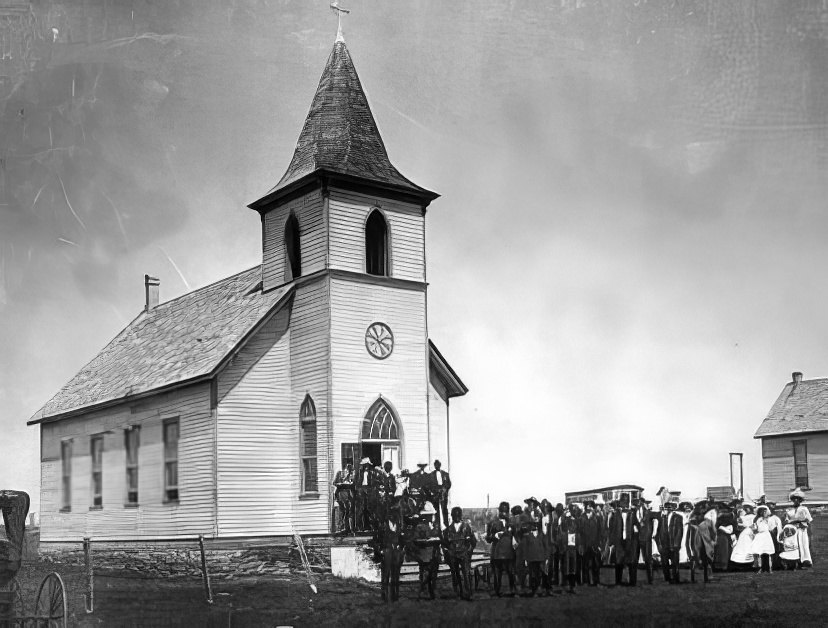
Perhaps she may even have attended an Easter service at the Markerville Lutheran Church.
Image courtesy Provincial Archives of Alberta, “Markerville, Alberta”, [between 1905 and 1907]. A4661.
Obtained from an Easter 2025 post on the Stephan G. Stephansson Facebook page.
A black-and-white photo from between 1905 and 1907 shows a group gathered in front of a white wooden Lutheran Church with a tall steeple. Men, women, and children stand in formal attire on the grass and church steps.
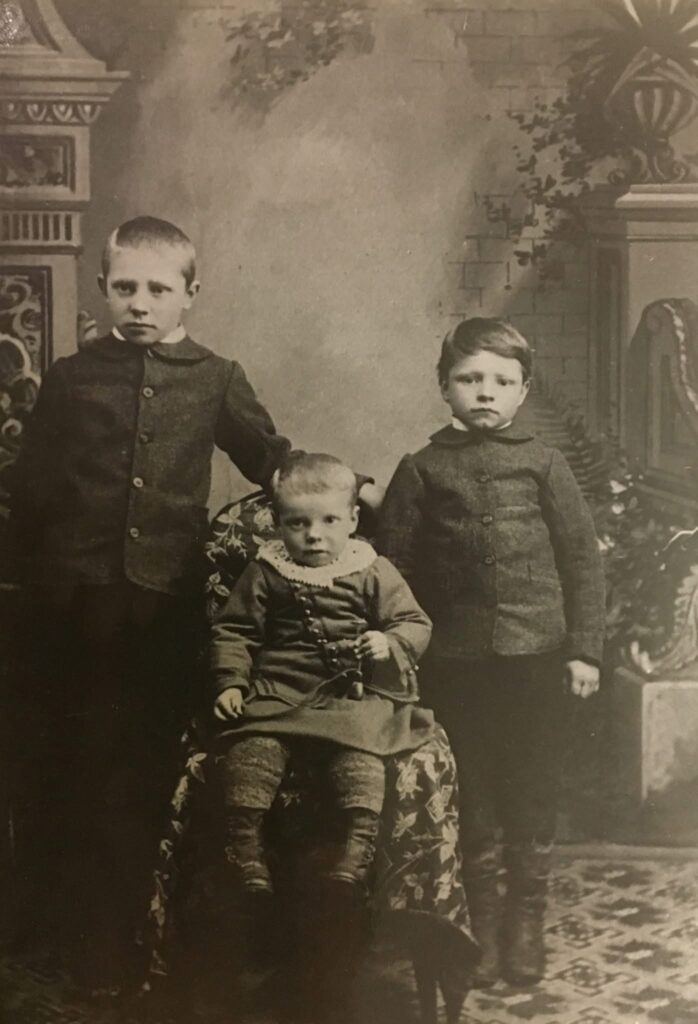
Baldur Stefánsson was born on September 25 in 1879 at Shawano, Wisconsin. At the age of ten he would leave with his family for their new home near Markerville, in the North-West Territories (now Alberta).
The photo below was taken in Dakota, shortly before they left. Baldur is on the left, Gudmundur in the center, and Jakob on the right.
Image courtesy Provincial Archives of Alberta, PH75.28.3.
Baldur is on the left, Gudmundur is seated in the center, and Jakob on the right.
On September 15, 1972, the Markerville Creamery closed its doors. It would re-open as a historic site in 1986.
The Creamery was started by the Tindastoll Butter and Cheese Manufacturing Association Limited, which was formed in August 1899 in Tindastoll, now Markerville, Alberta. The association was composed of a board of directors, which included a president, vice president, and three directors. The members of the first board of directors included Dan Morkeberg, J.M. Johnson, S. Goodman, J. Benedickson, and G. Thorlakson, with Stephan G. Stephansson as the first secretary. On March 5, 1910 the name of the association was changed to the Markerville Butter and Cheese Manufacturing Association.
Images of Dan Morkeberg at the Creamery, 1899 P7725, the Markerville Creamery [1901], P7726 and Markerville Creamery [1908], P7726 courtesy Red Deer Archives.
Helga Stephansson’s life was marked by resilience, quiet strength, and a deep commitment to both family and community. Born in Iceland and married at 19 in the first recorded Icelandic wedding in the United States (1876), Helga’s early years were spent doing domestic work to support her family before starting her own.
In 1889, pregnant and seeking a better future, Helga moved with her husband Stephan to the Markerville area. There, they built not just a home, but a life rooted in hard work and mutual respect. Their marriage may not have been a romantic love story, but it was a true partnership—one in which Helga had equal say in farm decisions and retained ownership of her earnings, a rare and significant stance for a woman at the time.
Raising eight children over 21 years, Helga’s days were filled with childrearing, homemaking, and letter writing. She remained the steady hand at home while her husband traveled widely for speaking engagements. After the tragic death of her son Gestur, Helga developed a lasting fear of thunderstorms—an enduring symbol of a mother’s grief.
Beyond her family, Helga gave generously to her community. She was a dedicated member of the Vonin Ladies Aid Society, contributing to the care and well-being of Markerville and its residents.
Her story is one of quiet leadership, enduring strength, and the often-unseen labour that built strong prairie communities.
Today, visitors to the Stephansson House Historic Site see not just a poet’s workspace, but also glimpse the life of Helga—the steadfast partner whose contributions made it all possible.
💛 Celebrate Helga’s legacy: the unsung pioneer woman whose dedication and endurance shaped a family and community.